

Digital Transformation
Every time your phone unlocks by recognising your face, a car warns you about a pedestrian, or a factory camera spots a faulty product, you're seeing computer vision at work. It's one of the most practical branches of artificial intelligence - yet it's rarely explained in plain terms. This simple introduction covers what computer vision is, how it works, and the real applications and examples reshaping business today.
What is computer vision?
Computer vision is a field of artificial intelligence that enables computers to interpret and understand visual information - images and video - the way humans do with their eyes and brain. In short, it teaches machines to "see" and make sense of what they're looking at.
A human glances at a photo and instantly knows it shows a dog on a beach. Computer vision aims to give software that same ability: to detect objects, recognise faces, read text, and understand scenes automatically.
The goal isn't just to capture an image, but to extract meaning from it. That distinction - from seeing pixels to understanding content - is the heart of computer vision.
How does computer vision work?
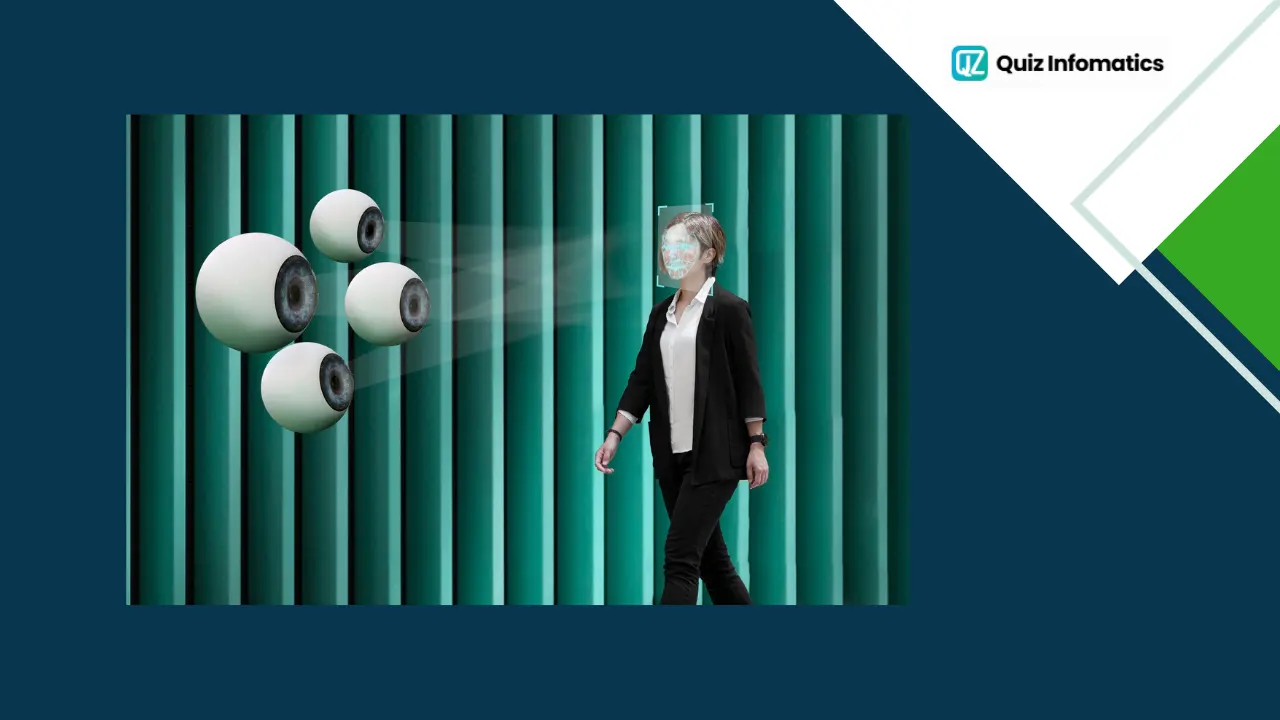
Computer vision works by breaking an image into data a computer can analyse, then using trained AI models to recognise patterns and draw conclusions. It usually follows three broad steps.
1. Capture. A camera or sensor records an image or video and converts it into digital data - essentially a grid of pixels with numeric values.
2. Process. The system cleans and prepares that data, adjusting things like brightness, contrast, and size so patterns are easier to detect.
3. Analyse and understand. A trained model examines the processed image, identifies patterns, and produces an output - "this is a car," "this weld is defective," or "this face matches an employee."
The intelligence comes from deep learning. Models called neural networks are trained on thousands or millions of labelled images until they learn to recognise features on their own. Show a model enough pictures of cracked and intact tiles, and it learns to tell them apart - often more consistently than a human.
Crucially, these systems improve with more data. The more examples they see, the sharper their accuracy becomes.
Computer vision vs AI vs machine learning: how do they relate?
The simplest way to think about it: artificial intelligence is the broad goal, machine learning is a method to achieve it, and computer vision is a specific application focused on visual data.
Artificial intelligence is the wide umbrella - any technique that lets machines mimic human intelligence. Machine learning is a subset where systems learn from data rather than being explicitly programmed. Computer vision uses machine learning (and especially deep learning) to solve one type of problem: understanding images and video.
So computer vision isn't separate from AI - it's one of its most visible and commercially valuable branches.
How did computer vision evolve?
Computer vision has moved from rigid, rule-based systems to flexible models that learn from examples - and that shift is why it works so well today. Early systems relied on hand-coded rules and struggled with anything unexpected.
The turning point came with deep learning in the 2010s. Instead of engineers manually describing what a "defect" or a "face" looked like, models began learning those patterns directly from large image datasets. Accuracy jumped dramatically.
More recently, cheaper cameras, powerful GPUs, and edge computing have made these capable models practical to deploy at scale - on a factory floor or a city street, not just in a research lab.
What are the main computer vision tasks?
Computer vision covers several core tasks, and most real-world systems combine a few of them. Understanding these makes the applications much easier to grasp.
Image classification - labelling an entire image ("this is a cat" or "this is a defective part").
Object detection - finding and locating multiple objects within an image, usually with bounding boxes.
Image segmentation - outlining the exact shape of objects, pixel by pixel, for precise analysis.
Facial recognition - identifying or verifying a person from their facial features.
Optical character recognition (OCR) - reading printed or handwritten text from images.
Object tracking - following an object's movement across video frames.
These building blocks combine into the practical systems businesses actually deploy - from security cameras to quality-control lines.
Computer vision vs machine vision: what's the difference?
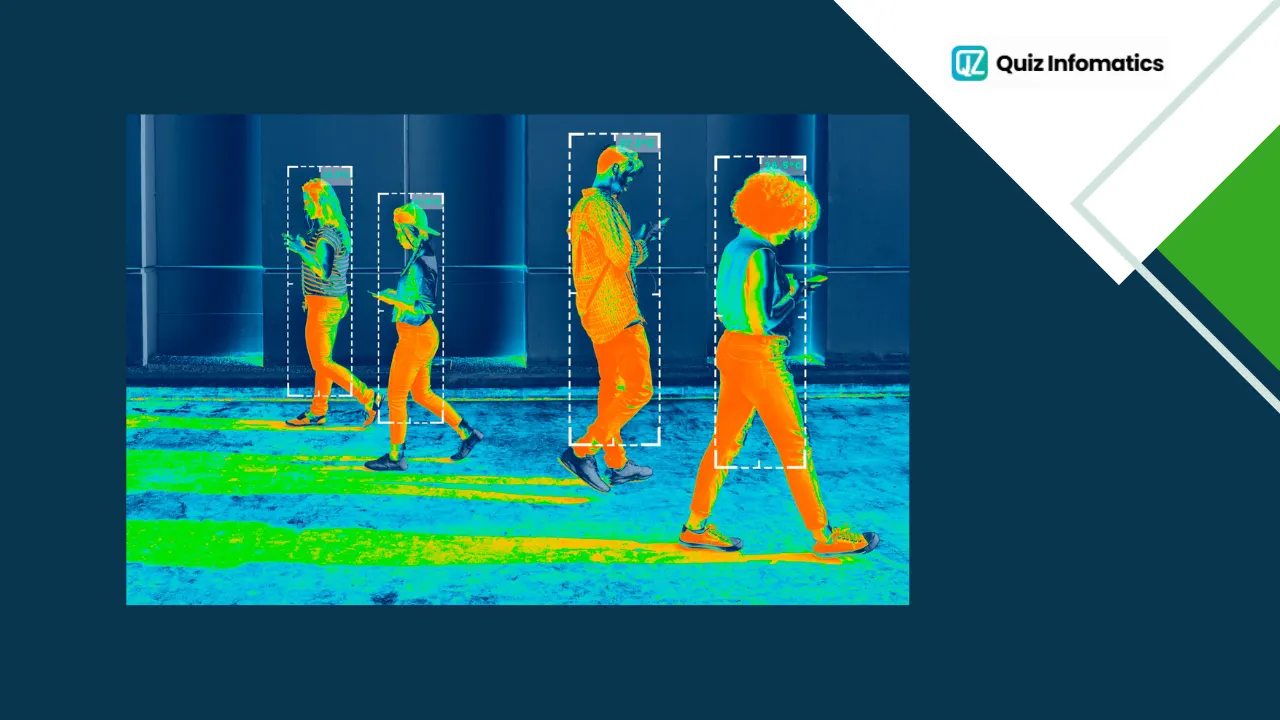
The two terms are related but not identical: machine vision is the industrial application of computer vision, typically fixed cameras inspecting products on a production line. Computer vision is the broader technology behind it.
Put simply, machine vision is usually a narrow, engineered setup for a specific factory task, while modern computer vision uses AI that can learn, generalise to new situations, and work across far more varied environments - from smartphones to smart cities.
In practice the line is blurring, as traditional machine-vision systems increasingly adopt the deep-learning techniques that define computer vision.
What are the applications of computer vision?
Computer vision applications now span almost every major industry, wherever visual data needs to be understood quickly and consistently. Adoption is concentrated in a handful of sectors: manufacturing leads at roughly 35%, followed by healthcare at about 27% and security at around 26% of usage.
Here's how the technology is applied across key industries:
Manufacturing. Automated quality inspection is the flagship use case. Vision systems check products on the line for defects far faster and more consistently than people - human inspectors miss an estimated 20–30% of defects under real production conditions, while AI vision systems reach 95–99% accuracy and inspect thousands of parts per hour.
Healthcare. Computer vision helps analyse medical images - X-rays, CT scans, and MRIs - to flag anomalies and support faster, more accurate diagnoses.
Retail. It powers cashier-less checkout, shelf monitoring, inventory tracking, and customer-flow analytics to reduce stock-outs and improve the shopping experience.
Security and surveillance. Vision systems detect intrusions, recognise faces, and identify unusual behaviour in real time, strengthening physical security.
Automotive. Self-driving and driver-assistance systems rely on computer vision to detect lanes, vehicles, pedestrians, and road signs.
Logistics and agriculture. Warehouses use it to sort and track packages, while farms use it for crop monitoring, pest detection, and yield estimation.
What are some real-world computer vision examples?
The clearest computer vision examples are the ones you already encounter every day, often without realising it. Concrete cases make the technology far easier to understand.
Face unlock on your smartphone verifies your identity using facial recognition.
Self-driving features in modern cars read road signs and spot obstacles.
Medical imaging tools highlight potential tumours or fractures for doctors to review.
Cashier-less stores track what shoppers pick up and charge them automatically.
Automatic number plate recognition (ANPR) manages parking, tolls, and access control.
Factory inspection cameras reject defective products before they ship.
Photo apps that automatically sort images by person, place, or object.
Each of these turns raw visual data into a useful action - the practical payoff of computer vision.
A closer look: computer vision on a production line
To make this concrete, consider how a computer vision system handles quality inspection in a factory - one of the most common and valuable business uses.
First, a camera mounted over the line photographs every item as it passes. Each image is processed and fed to a trained model in milliseconds. The model classifies the item as good or defective, and if it spots a flaw, it identifies the type and severity.
The system then acts automatically: it can reject the faulty item, alert an operator, and log the event with the image and a timestamp. Because it inspects 100% of production rather than a sample, nothing slips through unchecked.
The results speak for themselves. Where human inspectors typically handle a few items per minute and tire over a shift, vision systems inspect thousands per hour at steady, near-perfect accuracy — turning quality control from a bottleneck into a strength.
Why does computer vision matter now?
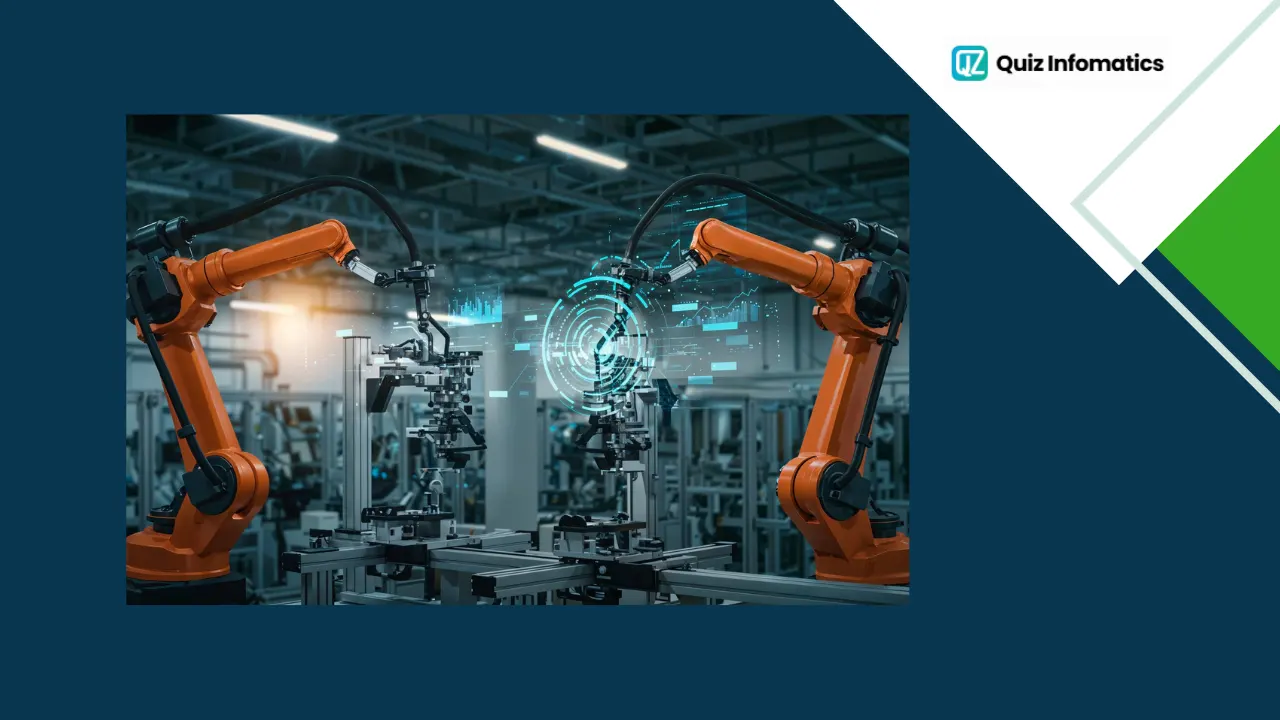
Computer vision matters now because the technology has become accurate, affordable, and fast enough for mainstream business use - and the market reflects that surge. The global computer vision market was valued at around USD 20.75 billion in 2025 and is projected to reach USD 72.80 billion by 2034, growing at a compound annual rate of roughly 15%.
Three forces are driving this shift: cheaper high-quality cameras and sensors, dramatic improvements in deep-learning accuracy, and the rise of edge computing that lets systems process images locally in real time.
Together, these have moved computer vision from research labs into everyday operations — factories, hospitals, shops, and city infrastructure.
"The biggest change we see with clients isn't the technology itself - it's that computer vision has become reliable enough to trust with real decisions. When a system inspects every single item at line speed with near-perfect consistency, it stops being a novelty and becomes core infrastructure." - QZ Infomatics AI & Cognivision Team
What are the benefits of computer vision for businesses?
The core benefit of computer vision is automating visual tasks with a speed, consistency, and scale that humans simply can't match. For most organisations, that translates into a few concrete gains.
Higher accuracy. Machines don't tire, get distracted, or disagree, so quality standards stay consistent across every shift.
Greater speed. Vision systems can inspect thousands of items per hour, removing manual bottlenecks.
Lower costs. Fewer defects, less waste, and reduced manual inspection lower operational expenses.
24/7 operation. Cameras and models work continuously without breaks.
Improved safety. Automated monitoring can flag hazards, protective-equipment breaches, or intrusions instantly.
Better data. Every decision is logged and auditable, feeding continuous improvement.
These benefits compound: a system installed for quality control often ends up generating valuable operational data as a by-product.
How is computer vision used in the UAE and the region?
In the UAE and wider GCC, computer vision is expanding fastest in smart cities, security, retail, and industrial sectors - areas central to the region's digital-transformation agenda. Government smart-city initiatives and heavy investment in automation have created fertile ground for adoption.
Common regional use cases include traffic and public-safety monitoring, access control and surveillance for large facilities, retail analytics in malls, and quality inspection in manufacturing and logistics hubs. Oil, gas, and construction operators also use vision systems for safety compliance and remote inspection.
For UAE businesses, the appeal is practical: computer vision addresses real local priorities - safety, efficiency, and round-the-clock monitoring - while fitting neatly into cloud and IoT infrastructure the region is already building out.
What are the challenges of computer vision?
Computer vision is powerful, but it isn't magic - successful projects account for a few real challenges from the start. Knowing them upfront is the best way to avoid disappointment.
Data quality and quantity. Models need large volumes of relevant, well-labelled images to perform well. Poor data means poor results.
Edge cases. Unusual lighting, angles, or rare scenarios can trip up a model that looks flawless in testing.
Privacy and compliance. Systems using facial or personal data must respect privacy laws and be deployed responsibly.
Integration. A vision system only delivers value when its outputs connect to real workflows - alerts, work orders, or dashboards.
Ongoing maintenance. Models need monitoring and periodic retraining as conditions and products change.
None of these are blockers, but they're the reason expert planning and a phased rollout matter so much.
Let’s talk about your business
Start with a free 30-minute call. We’ll ask the right questions, listen carefully, and give you an honest view of what’s possible.
How do businesses get started with computer vision?
The best way to start is with a focused, high-value use case - one clear problem where visual data is currently checked slowly or inconsistently by people. Trying to automate everything at once is the most common way projects stall.
A practical first step is a discovery process: identify the use case, assess the available data and cameras, run a small proof of concept, then scale what works. This keeps risk low and proves value early.
If you'd like guidance, our AI solutions team helps UAE and GCC businesses scope and deploy computer vision, and our CitrIoT platform connects vision and sensor data into real-time operational intelligence. The right partner turns a promising idea into a reliable, integrated system.
The future of computer vision
The future of computer vision is defined by three trends: edge AI, generative AI, and multimodal models that combine vision with language. Together they're making systems faster, smarter, and easier to build.
Edge computing lets models run directly on cameras and devices, cutting latency and cost while improving privacy. Generative and multimodal AI, meanwhile, allow systems not just to detect objects but to describe scenes, answer questions about images, and reason about what they see.
For a broader view of how these shifts fit into the changing workplace, see our perspective on how businesses are evolving with technology and AI. The direction is clear: visual intelligence is becoming a standard layer of modern business technology.
Computer vision in a nutshell
To recap the essentials:
Computer vision is the branch of AI that lets computers interpret and understand images and video.
It works by capturing visual data, processing it, and using deep-learning models trained on labelled images to recognise patterns.
Applications span manufacturing, healthcare, retail, security, automotive, and more - with manufacturing the biggest adopter.
Everyday examples include face unlock, self-driving features, medical imaging, and cashier-less stores.
For businesses, it delivers accuracy, speed, cost savings, and round-the-clock monitoring - provided projects start with good data and a clear use case.
Computer vision isn't science fiction anymore. It's a proven, fast-growing technology that helps organisations see more, decide faster, and operate smarter.
Frequently asked questions
What is computer vision in simple terms? Computer vision is technology that lets computers "see" and understand images and video, much like humans do. It powers things like face unlock, self-driving cars, and automated quality inspection.
How is computer vision different from AI? Artificial intelligence is the broad field of machines mimicking human intelligence. Computer vision is a specific branch of AI focused only on interpreting visual data - images and video.
What are examples of computer vision? Everyday examples include smartphone face unlock, automatic number plate recognition, medical image analysis, cashier-less retail checkout, and factory defect detection.
Is computer vision the same as image recognition? Not quite. Image recognition is one task within computer vision - identifying what's in an image. Computer vision is broader and also includes object detection, segmentation, tracking, and more.
Which industries use computer vision the most? Manufacturing is the largest adopter, followed by healthcare and security. Retail, automotive, logistics, and agriculture are growing quickly too.
Do I need a lot of data to use computer vision? Generally yes - models learn from examples, so quality and quantity of labelled images matter. However, pre-trained models and a focused use case can reduce how much you need to get started.
How accurate is computer vision? It depends on the task and data quality, but modern systems are highly capable - well-trained industrial inspection models routinely reach 95–99% accuracy, often exceeding human consistency. Accuracy improves as models are trained on more relevant examples.
Can small businesses use computer vision? Yes. Cloud services and pre-trained models have lowered the cost and complexity, so smaller companies can now start with a single, well-defined use case rather than a large upfront investment.
About the author
QZ Infomatics AI & Cognivision Team - QZ Infomatics is a Dubai-based technology and IT consultancy (Business Bay) delivering AI, computer vision, and IoT solutions for businesses across the UAE and GCC. Through its Cognivision AI-vision offering and CitrIoT platform, the team helps organisations in manufacturing, facility management, retail, and security put visual and sensor intelligence to work. This guide reflects hands-on experience scoping and deploying computer vision projects in the region.
Exploring computer vision for your business? Talk to our AI solutions team.