
Digital Transformation
What Is ERP? A Plain-English Guide for UAE Businesses
If your finance team is exporting spreadsheets, your warehouse is guessing at stock levels, and your sales team is chasing numbers that never quite match the books, you already feel the problem an ERP system was built to solve. This guide explains what ERP is in plain English, how an ERP system actually works, and what it means for businesses operating in the UAE - without the jargon.
What is ERP?
ERP stands for Enterprise Resource Planning. It's a single software system that connects all your core business functions - finance, inventory, sales, purchasing, HR, and more - so they share one set of data instead of living in separate, disconnected tools.
Think of it as the central nervous system of a business. When a sale is recorded, the ERP updates inventory, accounting, and reporting at the same moment, automatically. Everyone works from the same numbers, in real time.
That's the short answer to "what is ERP." The rest of this guide unpacks what that means in practice.
What does ERP mean in plain English?
The simplest ERP meaning: software that runs your whole business from one place.
Without ERP, most companies use a patchwork of systems - one tool for accounting, another for inventory, a third for payroll, plus a pile of spreadsheets holding it all together. Each tool has its own version of the truth, and someone has to manually move data between them.
An ERP replaces that patchwork with one connected platform. The "enterprise" part means it covers the whole organisation. The "resource planning" part means it helps you manage your resources - money, materials, people, and time - efficiently.
What is an ERP system, exactly?
An ERP system is the actual software platform that brings these functions together on a shared database. Modern ERP is usually delivered as a suite of modules, and you switch on the ones your business needs.
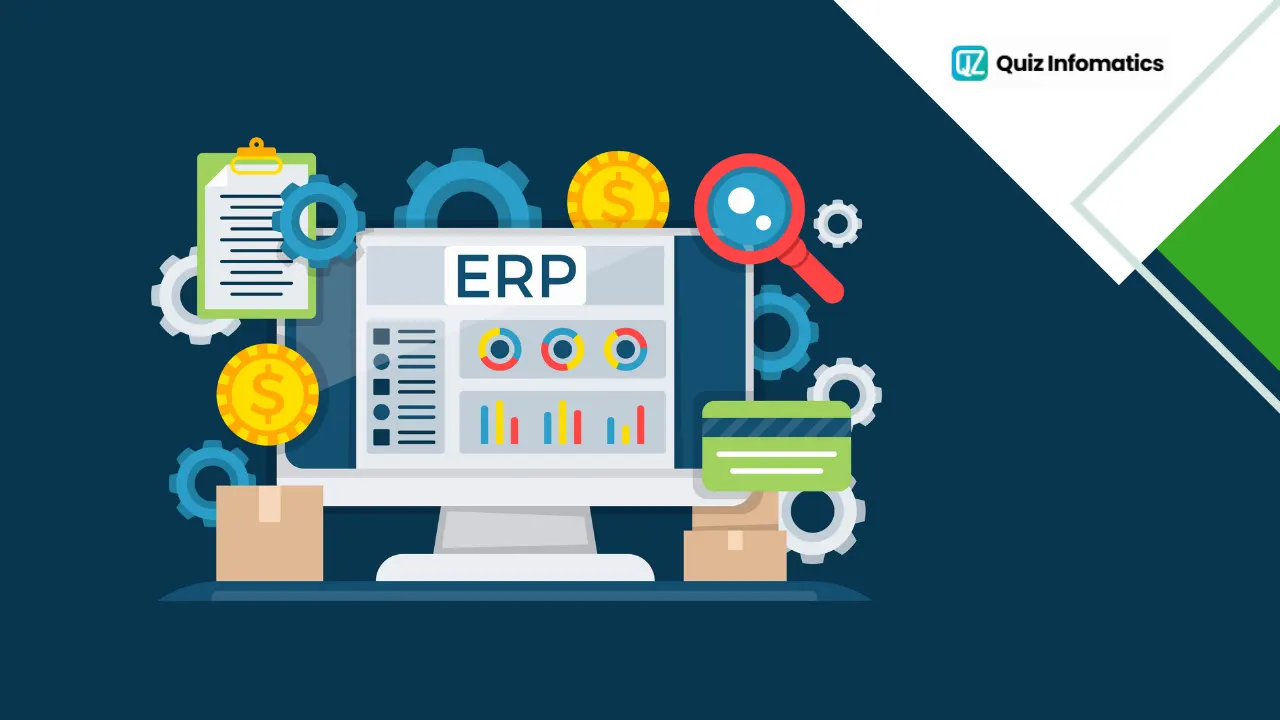
The core idea is one shared database. Instead of finance, operations, and sales each keeping their own records, the ERP stores everything once and lets every department read from and write to the same source. That single source of truth is what makes ERP powerful.
Common modules in an ERP system include:
Finance and accounting — general ledger, accounts payable and receivable, VAT and corporate tax reporting
Inventory and supply chain - stock levels, procurement, warehousing, and logistics
Sales and CRM - quotes, orders, and customer history
Human resources - payroll, attendance, leave, and employee records
Manufacturing or project management - production planning, job costing, and resource scheduling
You don't need every module on day one. A growing UAE trading company might start with finance and inventory, then add HR and CRM as it scales. In fact, 89% of companies identify accounting as the most critical ERP function, which is why finance is the most common starting point.
What does an ERP system do?
In one line: an ERP automates and connects the everyday tasks that keep a business running, so data flows between departments without manual re-entry.
Here's a concrete example. A Dubai-based distributor receives a customer order. The ERP checks live stock, reserves the items, generates a tax-compliant invoice, updates the accounts, triggers a reorder if stock drops below a threshold, and logs everything for reporting - all from a single entered order.
Done manually across separate tools, that same process might involve four people, three spreadsheets, and a high chance of an error somewhere along the way. The ERP collapses it into one automated flow, which is where the time and cost savings come from.
How does an ERP system work?
An ERP works by sitting on top of one central database that every module reads from and writes to.
When any user takes an action - recording a payment, shipping a product, hiring an employee - that action updates the shared database instantly. Every other part of the system sees the change immediately, so reports, dashboards, and balances stay current.
Most ERP systems today are cloud-based, meaning the software runs on the provider's servers and your team accesses it through a browser or app. This is why a finance manager in Abu Dhabi and a warehouse supervisor in Sharjah can work in the same live system without anyone emailing files back and forth.
What are the main benefits of an ERP system?
The biggest benefit of an ERP system is a single source of truth - accurate, real-time data that every department can rely on. From that foundation, the practical gains stack up quickly.
Higher productivity. Automating repetitive tasks frees your team for higher-value work. Around 74% of businesses report increased productivity after adopting ERP.
Lower costs. Better inventory and purchasing control reduces waste. Roughly 62% of companies report cost reductions, especially in procurement and stock.
Better decisions. Live dashboards replace outdated, end-of-month reports, so leaders act on current information.
Easier compliance. Tax, audit, and regulatory reporting become a by-product of daily operations rather than a scramble.
Room to scale. Adding a branch, a product line, or a new emirate doesn't mean bolting on another disconnected tool.
These benefits explain why ERP adoption keeps climbing across company sizes - not just large enterprises, but the small and mid-sized businesses that form the backbone of the UAE economy.
Why ERP matters for UAE businesses
ERP has shifted from a "large enterprise" luxury to a mainstream tool for UAE businesses of all sizes - and the numbers back this up.
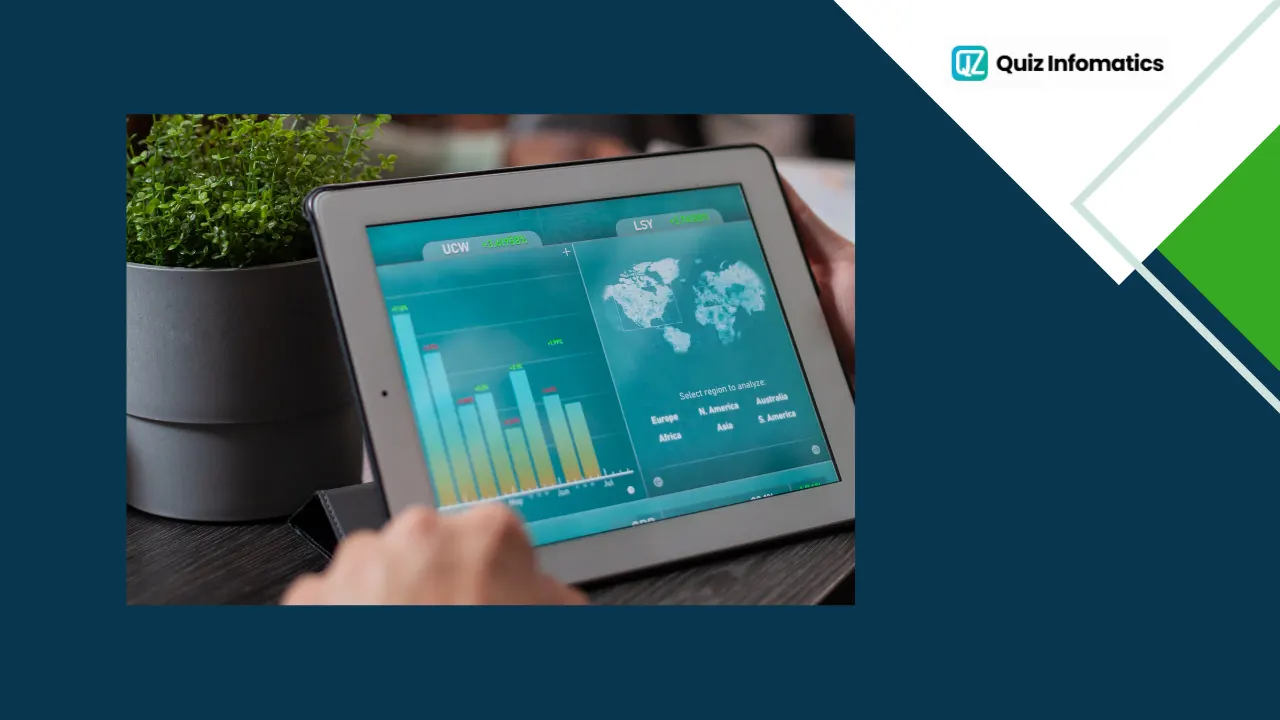
The UAE ERP software market generated around USD 631.8 million in 2025 and is projected to reach USD 1.5 billion by 2033, growing at a compound annual rate of 11.6%. That growth is driven by digital transformation, government cloud initiatives, and a fast-expanding SME sector.
There are three reasons ERP matters especially here:
Compliance is non-negotiable. With VAT and the newer corporate tax regime, UAE businesses need accurate, auditable financial records. An ERP handles tax calculation and reporting automatically, reducing the risk of costly errors.
The market is going cloud-first. Cloud was the largest ERP deployment segment in the UAE, at roughly 61% of the market in 2025, helped along by government digital-transformation mandates pushing organisations toward cloud platforms.
The payoff is measurable. Globally, around 74% of businesses report higher productivity and 62% report lower costs after implementing ERP — particularly in purchasing and inventory.
"The businesses that get the most from ERP in the UAE aren't necessarily the biggest — they're the ones that map their processes before they pick a platform. Software follows strategy, not the other way around." - QZ Infomatics ERP Consulting Team
Cloud ERP vs on-premise: what's the difference?
The main difference is where the software lives and how you pay for it. Cloud ERP runs on the vendor's servers with a subscription fee; on-premise ERP runs on your own servers with a larger upfront cost.
Cloud ERP has become the default for most UAE businesses because it offers lower upfront costs, faster deployment, automatic updates, and easy access across multiple branches or emirates. On-premise still appeals to organisations with strict data-residency requirements or heavy customisation needs.
For most small and mid-sized companies starting out, cloud ERP is the simpler, more affordable entry point — and it scales without the hardware headaches.
ERP vs CRM vs accounting software: how are they different?
The simplest distinction: accounting software manages your money, CRM manages your customers, and ERP manages your entire business - including both of those.
Accounting software (like a standalone bookkeeping tool) handles invoices, expenses, and financial reports, but nothing beyond finance. CRM software focuses on sales pipelines and customer relationships. Each does one job well.
An ERP system includes finance and customer management as modules, but connects them to inventory, purchasing, HR, and operations on one database. So while a small startup might run fine on separate accounting and CRM tools, a growing company usually reaches a point where those tools stop talking to each other - and that's when ERP earns its place.
What are the signs your business needs an ERP system?
The clearest sign is when your current tools start creating more work than they save. A few common signals:
You're rekeying the same data into multiple systems
Your reports are always out of date by the time they reach a decision-maker
Stock-outs and overstocking keep happening because inventory data is unreliable
Closing the books each month takes days, not hours
Departments argue over which numbers are correct
If two or three of these sound familiar, your business has likely outgrown spreadsheets and entry-level accounting software — the typical tipping point for adopting ERP.
What are the challenges of ERP - and how do you avoid them?
The honest answer: ERP projects can be difficult, and roughly half of first-time implementations run into serious trouble. Knowing the common pitfalls is the best way to sidestep them.
The most frequent challenges are:
Poor planning. Choosing software before mapping your processes is the number-one cause of failure.
Underestimating change management. Even great software fails if your team doesn't adopt it. Training and internal buy-in matter as much as the technology.
Scope creep. Trying to do everything at once stretches budgets and timelines.
Bad data. Migrating messy, inconsistent records into a new system simply moves the problem.
The fix for most of these is the same: plan thoroughly, roll out in phases, clean your data first, and involve the people who'll actually use the system. Companies that engage experienced consultants report an 85% project success rate, precisely because a good partner anticipates these traps.
How long does an ERP implementation take, and what does it cost?
ERP implementation typically takes a few months to over a year, depending on your size and complexity — and cost scales the same way.
Small and mid-sized businesses often go live within three to nine months, while large enterprises can take up to 18 months. A phased rollout - starting with finance, then adding modules - usually delivers value faster and carries less risk than a "big bang" switch.
On cost, a common benchmark is budgeting around 3% of annual revenue for a multi-year ERP investment, covering software, implementation, and ongoing support. It's a real investment - but the return is measurable too. Recent research puts the average ERP ROI at about 52%, with most businesses recovering their costs within roughly 16 months.
Let’s talk about your business
Start with a free 30-minute call. We’ll ask the right questions, listen carefully, and give you an honest view of what’s possible.
What are the main ERP platforms?
There's no single "best" ERP — the right one depends on your size, industry, and budget. The major platforms used by UAE businesses include:
Oracle NetSuite - a cloud-native suite popular with fast-growing companies that need finance, inventory, and operations in one system. You can explore the details on our Oracle ERP solutions page.
Microsoft Dynamics 365 - a strong fit for mid-to-large companies already using Microsoft tools, with cloud and hybrid options.
SAP - favoured by large enterprises with complex, multi-entity operations.
Odoo - open-source and modular, letting smaller businesses start with one or two apps and scale up affordably.
Each platform has genuine strengths, and the wrong fit is a common reason implementations struggle. This is where independent advice pays for itself.
Where ERP is heading
The next wave of ERP is built around artificial intelligence. AI features are moving from optional add-ons to core capabilities, and the early results are striking.
Organisations using AI-enabled ERP have reported around a 20% improvement in forecasting accuracy and a 15% reduction in operating costs. For UAE businesses planning a long-term investment, choosing a platform with a credible AI roadmap is increasingly part of the decision.
How do UAE businesses get started with ERP?
Start by mapping your processes and goals before you look at any software — then choose a platform that fits, not the other way around.
The data makes a strong case for expert guidance. Companies that engage experienced consultants report around an 85% project success rate, and 83% of organisations that run a pre-implementation analysis meet their ROI expectations, typically recovering their investment within about 16 months.
A practical first step is a structured discovery process: a consultant maps your workflows, identifies where time and money are leaking, and recommends the platform and modules that match your needs and budget. If you'd like that kind of support, our ERP consulting services walk businesses through platform selection and implementation across the UAE and wider GCC.
For a deeper look at how integrated systems are reshaping operations, see our overview of how ERP shapes the business of today.
ERP in a nutshell
To recap the essentials:
ERP stands for Enterprise Resource Planning - software that runs your whole business from one connected platform.
An ERP system unifies finance, inventory, sales, HR, and more on a single shared database, so everyone works from the same real-time data.
For UAE businesses, ERP simplifies VAT and corporate tax compliance, supports the shift to cloud, and delivers measurable gains in productivity and cost control.
The right platform depends on your size and industry - and getting expert help dramatically improves your odds of success.
ERP isn't about buying software for its own sake. It's about giving your business one reliable source of truth, so you spend less time wrestling with data and more time growing.
Frequently asked questions
What does ERP stand for? ERP stands for Enterprise Resource Planning - software that connects your core business functions on one shared system.
What is an ERP system in simple terms? It's a single platform that manages finance, inventory, sales, HR, and operations together, so every department works from the same real-time data instead of separate tools.
Is ERP only for large companies? No. While ERP began with large enterprises, cloud-based platforms have made it affordable and practical for small and mid-sized UAE businesses too - and SMBs are now one of the fastest-growing adopters.
What is the difference between ERP and accounting software? Accounting software only handles your finances. An ERP includes accounting as one module and connects it to inventory, purchasing, HR, and more on a single database.
What is cloud ERP? Cloud ERP is an ERP system hosted on the vendor's servers and accessed online, usually for a subscription fee. It's faster to deploy and easier to access across multiple locations than on-premise software.
How much does ERP cost in the UAE? Costs vary widely with company size and scope, but a common planning benchmark is around 3% of annual revenue across a multi-year investment covering software, implementation, and support.
About the author
QZ Infomatics ERP Consulting Team - QZ Infomatics is a Dubai-based ERP and IT consultancy (Business Bay) that implements Oracle NetSuite, Microsoft Dynamics 365, SAP, and Odoo for businesses across the UAE and GCC. As a Microsoft and Odoo partner, the team has delivered ERP and digital-transformation projects across construction, manufacturing, food and beverage, facility management, and trading and distribution. This guide reflects hands-on experience helping UAE companies select, implement, and get value from ERP systems.
Have questions about choosing the right ERP for your business? Talk to our ERP consultants.