
Digital Transformation
What Is Microsoft Dynamics 365? A Beginner's Guide
You've probably heard the name Microsoft Dynamics in conversations about ERP, CRM, or "the system that runs the whole business" - but pinning down what it actually is can be confusing. Is it one product or many? An ERP or a CRM? The same thing as Microsoft 365? This beginner's guide answers all of that in plain English, with a clear focus on what Microsoft Dynamics 365 means for businesses in the UAE.
What is Microsoft Dynamics?
Microsoft Dynamics is Microsoft's family of business applications for managing core operations - finance, sales, customer service, supply chain, and more. Today, that family lives under one modern, cloud-based brand: Microsoft Dynamics 365.
In other words, when people ask "what is Microsoft Dynamics" today, the honest answer is that the current product is Dynamics 365. The older on-premise products (like Dynamics AX, NAV, GP, and CRM) have been reshaped into cloud apps within the Dynamics 365 suite.
So rather than a single piece of software, think of Microsoft Dynamics as a connected toolkit. You turn on the apps your business needs and add more as you grow.
What is Dynamics 365?
Dynamics 365 is a cloud-based suite of business applications that combines ERP (Enterprise Resource Planning) and CRM (Customer Relationship Management) on one platform. It's built and maintained by Microsoft and accessed through the cloud, so there's no server to host yourself.
The key idea behind Dynamics 365 is modularity. Instead of buying one giant system, you subscribe to individual apps - Finance, Sales, Customer Service, Supply Chain Management, and others — that all share data and work together.
This matters because most businesses don't need everything at once. A growing UAE company might start with finance and sales, then layer on supply chain or customer service later, without switching systems.
The market reflects this momentum. The global Microsoft Dynamics market reached around USD 11.37 billion in 2025 and is projected to grow to USD 18.91 billion by 2030, at a compound annual growth rate of about 10.5%.
What is ERP software, and how does Dynamics 365 fit in?
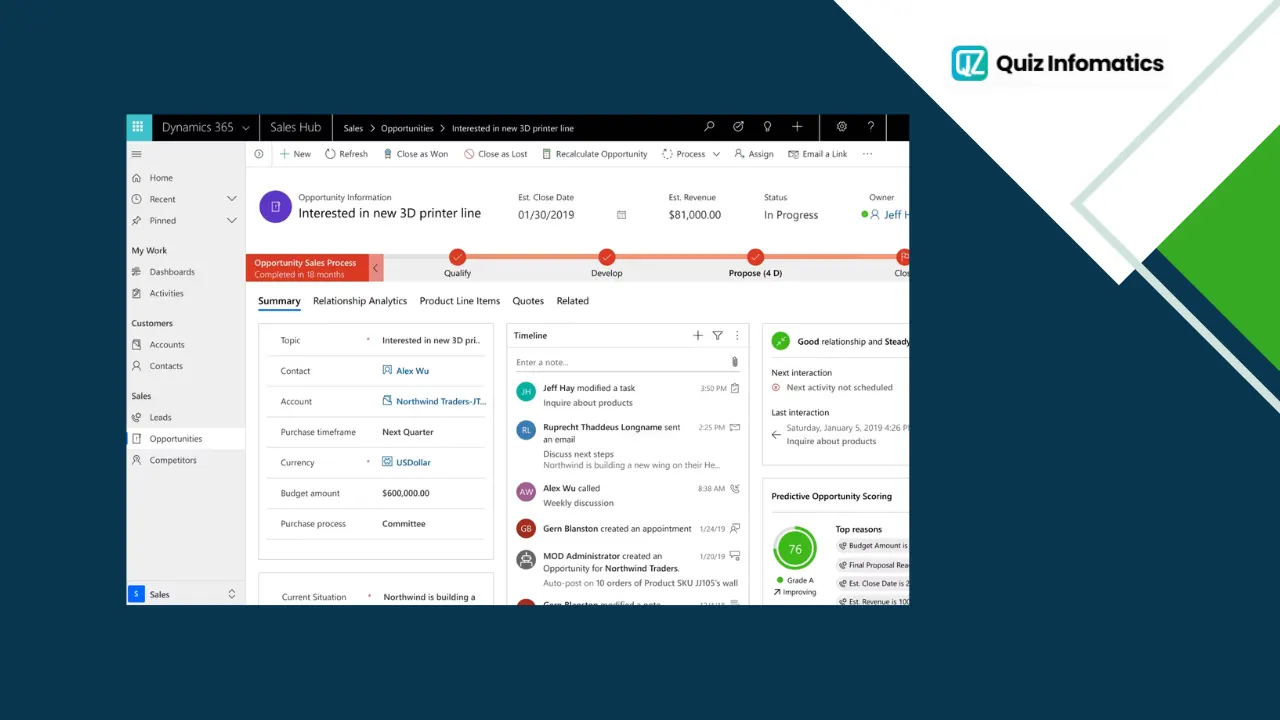
ERP software is a system that connects your core business functions - finance, inventory, purchasing, HR, and operations - on one shared database, so everyone works from the same real-time data. Dynamics 365 includes a full ERP capability among its apps.
Before Dynamics 365, many companies ran finance in one tool, inventory in another, and sales in a third, then spent hours reconciling them. ERP software removes that friction by giving every department a single source of truth.
The payoff is real and measurable. Globally, around 74% of businesses report higher productivity and 62% report lower costs after implementing ERP, particularly in purchasing and inventory.
ERP vs CRM: what's the difference, and why does Dynamics 365 do both?
The simplest distinction: ERP manages your internal operations and money, while CRM manages your relationships with customers. Most platforms specialise in one. Dynamics 365 is notable because it covers both.
Its ERP apps (such as Finance and Supply Chain Management) handle accounting, inventory, and operations. Its CRM apps (such as Sales and Customer Service) handle leads, deals, and support. Because they sit on the same platform, a closed sale can flow straight into inventory and invoicing with no manual hand-off.
That dual capability is a big reason Dynamics 365 appeals to businesses that want to avoid stitching separate ERP and CRM tools together.
What are the main Dynamics 365 apps?
Dynamics 365 is organised into focused business apps, and you only pay for the ones you use. The most widely adopted include:
Dynamics 365 Business Central - an all-in-one ERP for small and mid-sized businesses, covering finance, sales, purchasing, inventory, and projects.
Dynamics 365 Finance - advanced financial management for larger or more complex organisations.
Dynamics 365 Supply Chain Management - manufacturing, warehousing, and inventory operations.
Dynamics 365 Sales - the CRM app for managing leads, opportunities, and pipelines.
Dynamics 365 Customer Service - case management and support across channels.
Dynamics 365 Commerce, Field Service, and Human Resources - for retail, on-site service, and people management respectively.
Two of these deserve a closer look because they often confuse newcomers.
Business Central vs Finance & Operations
Business Central is built for small and mid-sized companies that want one straightforward system. Finance and Supply Chain Management (often called Finance & Operations) are built for larger enterprises with complex, multi-entity needs.
For most UAE SMEs, Business Central is the natural starting point - it's quicker to deploy and easier to run. Larger groups with multiple subsidiaries or heavy manufacturing typically move toward the Finance & Operations apps.
Choosing correctly between the two is one of the most important early decisions, and getting it wrong is a common, costly mistake.
How does Microsoft Dynamics 365 work?
Dynamics 365 works as a set of cloud apps that share one data foundation and connect tightly with the rest of the Microsoft ecosystem. Because it's cloud-based, your team accesses it through a browser or app from any location.
Three connections make it especially powerful:
Microsoft 365 (Office): Dynamics 365 links with Outlook, Excel, and Teams, so staff work inside familiar tools.
Power Platform: Power BI dashboards, Power Automate workflows, and Power Apps let you report and automate without heavy custom coding.
Microsoft Azure: the cloud infrastructure that keeps everything secure, scalable, and available.
Here's a simple example. A salesperson in Dubai closes a deal in Dynamics 365 Sales. The order flows to Supply Chain Management, stock is reserved, Finance raises a VAT-compliant invoice, and a Power BI dashboard updates revenue in real time - all without re-entering data.
What are the benefits of Microsoft Dynamics 365?
The biggest benefit of Dynamics 365 is having ERP and CRM unified on one platform that already connects to the Microsoft tools your team uses daily. From there, the practical advantages add up.
One connected system. No more disconnected finance, sales, and inventory tools.
Familiar experience. Tight integration with Outlook, Excel, and Teams shortens the learning curve.
Scalability. Start with one or two apps and expand as you grow — you only pay for what you use.
Real-time insight. Built-in Power BI turns your data into live dashboards for faster decisions.
Built-in compliance. Automated tax and financial reporting suit the UAE's VAT and corporate tax requirements.
Strong ROI potential. Companies that plan well see measurable returns; research puts the average ERP ROI around 52%, with payback in roughly 16 months.
"For UAE companies already living in Outlook, Excel, and Teams, Dynamics 365 often feels less like adopting new software and more like switching on capabilities they already half-expected their tools to have. That familiarity is a genuine advantage during rollout." - QZ Infomatics ERP Consulting Team
Let’s talk about your business
Start with a free 30-minute call. We’ll ask the right questions, listen carefully, and give you an honest view of what’s possible.
How popular is Microsoft Dynamics 365?
Dynamics 365 is one of the most widely used business platforms in the world, with strong adoption among small and mid-sized companies - not just large enterprises. Industry data tracks close to 98,000 companies using Microsoft Dynamics 365, and it holds roughly a 10% share of the CRM market.
Importantly for smaller businesses, the same data shows that a majority of Dynamics 365 customers are small companies (under USD 50 million in revenue). It is most commonly used by organisations with 50–200 employees - squarely the profile of many growing UAE firms.
This breadth is reassuring if you're a smaller business wondering whether Dynamics 365 is "too enterprise" for you. The evidence says it isn't.
Which industries use Microsoft Dynamics 365?
Dynamics 365 is industry-agnostic, but it has particularly strong adoption in sectors that depend on tight coordination between operations and customers. In the UAE, that includes several of the region's biggest economic drivers.
Construction and contracting - project costing, procurement, and progress billing in one place, so site activity and finance stay aligned.
Manufacturing - production planning, inventory, and supply chain management through the Supply Chain app.
Trading and distribution - multi-warehouse stock control, order processing, and demand forecasting.
Retail and commerce - unified sales, inventory, and customer data across stores and online channels.
Professional and field services — scheduling, job management, and customer support for service-led businesses.
The common thread is complexity: once a business juggles multiple branches, currencies, or product lines, disconnected tools start to break down. That's the point at which a unified platform like Dynamics 365 earns its place.
Microsoft Dynamics 365 vs other ERP and CRM platforms
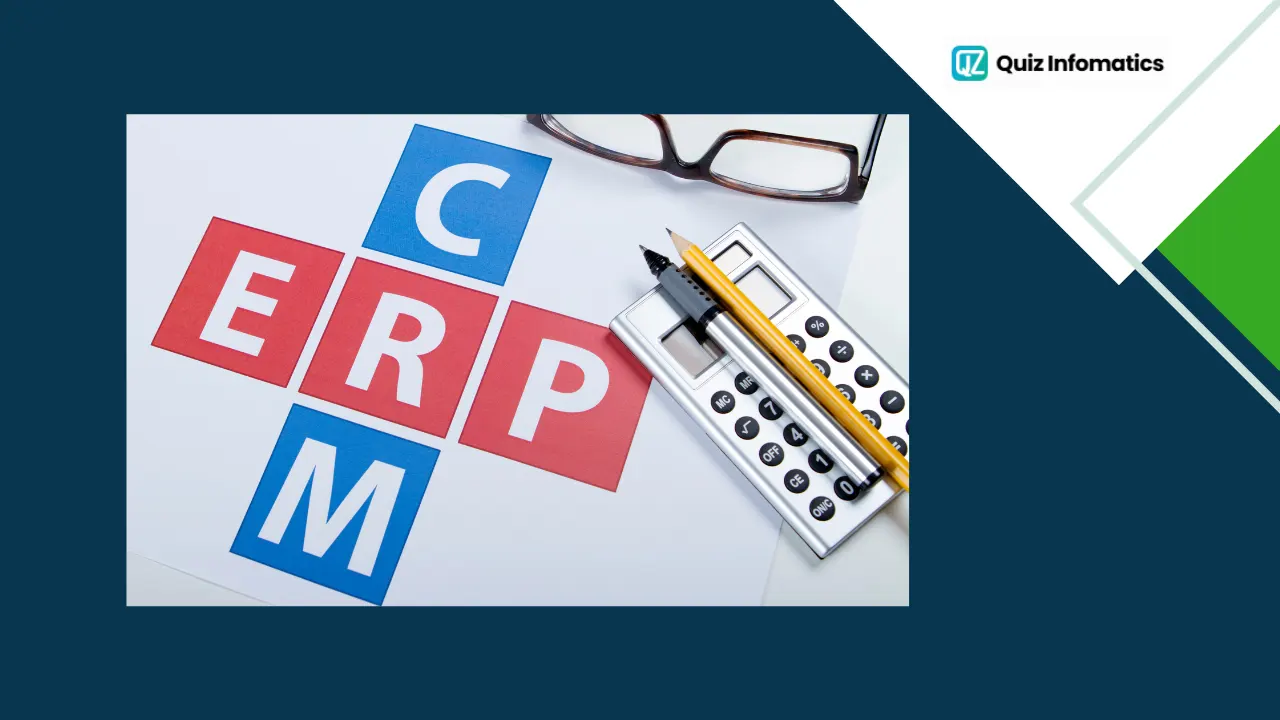
Dynamics 365 competes with platforms like SAP, Oracle NetSuite, and Salesforce - and the right choice depends entirely on your size, industry, and existing tools. There's no universal "best."
In broad terms: SAP suits very large, complex enterprises; Oracle NetSuite is a popular cloud ERP for fast-growing companies; and Salesforce is a CRM specialist. Dynamics 365 stands out for combining ERP and CRM while integrating natively with Microsoft 365.
If your team already runs on Microsoft tools, Dynamics 365 often wins on familiarity and integration alone. To weigh the trade-offs properly, see our guide to choosing the right ERP and understanding the landscape of ERP systems.
Why do UAE businesses choose Microsoft Dynamics 365?
UAE businesses choose Dynamics 365 for three main reasons: compliance, the cloud, and the fact that so many of them already run on Microsoft. Each of these maps neatly onto local market conditions.
Compliance is built in. With VAT and the corporate tax regime now part of doing business in the UAE, accurate and auditable records are essential. Dynamics 365 automates tax calculation and reporting, lowering the risk of expensive errors.
The market is cloud-first. Cloud was the largest ERP deployment segment in the UAE at roughly 61% of the market in 2025, and the wider UAE ERP market is projected to grow from around USD 631.8 million in 2025 toward USD 1.5 billion by 2033. As a cloud-native platform, Dynamics 365 fits this direction.
Microsoft is already everywhere. Many UAE companies already use Outlook, Excel, and Teams daily. Adding Dynamics 365 extends a familiar ecosystem rather than introducing a foreign one, which eases adoption.
How much does Microsoft Dynamics 365 cost?
Dynamics 365 is priced per app, per user, per month — so your cost depends on which apps you switch on and how many people use them. There's no single sticker price.
This model is an advantage for smaller businesses, because you avoid paying for capabilities you don't need. A company can license just Business Central for its core team, then add Sales licences for the sales department later.
Beyond licences, budget for implementation, data migration, training, and ongoing support. A common planning benchmark across ERP projects is around 3% of annual revenue spread over a multi-year investment. A local consultant can size this accurately for your business before you commit.
What are the challenges - and how do you avoid them?
The honest truth is that ERP and CRM projects can be difficult, and roughly half of first-time implementations run into serious trouble. The good news is that the causes are well understood and avoidable.
The most common pitfalls are:
Choosing software before mapping your processes. Strategy should drive the platform, not the reverse.
Underestimating change management. Even great software fails if staff don't adopt it; training and buy-in are essential.
Scope creep. Trying to switch on everything at once stretches budgets and timelines.
Migrating messy data. Moving inconsistent records into a clean system just relocates the problem.
The reliable fix is to plan thoroughly, roll out in phases, clean your data first, and involve the people who'll use the system. Notably, companies that engage experienced consultants report an 85% project success rate, with 83% meeting their ROI expectations when they run a pre-implementation analysis.
AI in Dynamics 365: where it's heading
The newest chapter for Dynamics 365 is AI, delivered through Microsoft Copilot built directly into the apps. Copilot can draft customer emails, summarise records, surface insights, and automate routine steps across sales, service, finance, and supply chain.
This matters for the future-proofing question. AI is moving from a bolt-on to a core feature, and organisations using AI-enabled ERP have reported around a 20% improvement in forecasting accuracy and a 15% reduction in operating costs.
For UAE businesses making a multi-year investment, a platform with a credible, embedded AI roadmap is an increasingly important consideration — and it's an area where Dynamics 365 is investing heavily.
How do UAE businesses get started with Dynamics 365?
Start by mapping your processes and goals, then match them to the right Dynamics 365 apps — not the other way around. A rushed software choice is the single most common reason projects disappoint.
A practical first step is a structured discovery process: a consultant reviews your workflows, identifies where time and money leak, and recommends the apps, licensing, and rollout plan that fit your needs and budget. Because the data shows expert guidance lifts success rates significantly, this step usually pays for itself.
If you'd like that support, explore our Microsoft Dynamics 365 solutions to see how we deploy the platform locally, or speak with our team through our ERP consulting services for help across the UAE and wider GCC.
Microsoft Dynamics 365 in a nutshell
To recap the essentials:
Microsoft Dynamics is Microsoft's family of business apps, now delivered as the cloud suite Dynamics 365.
Dynamics 365 combines ERP and CRM on one modular platform - you switch on the apps you need, from Business Central for SMEs to Finance & Operations for enterprises.
It integrates natively with Microsoft 365, Power BI, and Azure, which makes adoption easier for the many UAE businesses already using Microsoft tools.
It's used by close to 100,000 companies worldwide, mostly small and mid-sized — so it suits growing businesses, not just giants.
Success depends on planning, phased rollout, and expert guidance far more than on the software alone.
Dynamics 365 isn't about buying software for its own sake. It's about running your whole business — operations and customers - from one connected, intelligent platform.
Frequently asked questions
What does Microsoft Dynamics 365 include? Dynamics 365 is a suite of cloud business apps covering both ERP (finance, supply chain, operations) and CRM (sales, customer service, marketing). You subscribe only to the apps you need.
Is Dynamics 365 an ERP or a CRM? It's both. Dynamics 365 includes ERP apps for internal operations and CRM apps for customer relationships, all on one shared platform.
Is Microsoft Dynamics 365 the same as Microsoft 365? No — this is a common mix-up. Microsoft 365 (formerly Office 365) is the productivity suite with Word, Excel, Outlook, and Teams. Dynamics 365 is the separate business-applications suite for ERP and CRM. They integrate well, but they are different products.
Is Dynamics 365 good for small businesses? Yes. Dynamics 365 Business Central is designed for small and mid-sized companies, and industry data shows most Dynamics 365 customers are smaller businesses rather than large enterprises.
How much does Microsoft Dynamics 365 cost? Pricing is per app, per user, per month, so cost depends on the apps and number of users you choose. Implementation, data migration, training, and support are additional and are best estimated by a consultant.
What is Microsoft Copilot in Dynamics 365? Copilot is Microsoft's built-in AI assistant. Within Dynamics 365 it can draft emails, summarise data, suggest next steps, and automate routine tasks across the business apps.
About the author
QZ Infomatics ERP Consulting Team - QZ Infomatics is a Dubai-based ERP and IT consultancy (Business Bay) that implements Microsoft Dynamics 365, Oracle NetSuite, SAP, and Odoo for businesses across the UAE and GCC. As a Microsoft and Odoo partner, the team has delivered ERP, CRM, and digital-transformation projects across construction, manufacturing, food and beverage, facility management, and trading and distribution. This guide reflects hands-on experience helping UAE companies select, implement, and get value from Microsoft Dynamics 365.
Considering Dynamics 365 for your business? Talk to our Microsoft Dynamics consultants.